It has been some time since our last update. We would like to share our ongoing agricultural demonstration and data collection activities in Vietnam, where we are currently conducting field trials using biochar.
Our biochar initiatives in Vietnam focus on three major crop categories: rice, horticultural crops, and fruit trees. In this article, we would like to introduce our work related to fruit trees—specifically coffee cultivation.
Vietnam is the world’s second-largest coffee producer. However, its primary production consists of Robusta varieties rather than high-quality Arabica. In Da Lat, a region known for its agricultural potential, there has been a long-standing effort to support ethnic minority communities engaged in coffee farming.
More than a decade ago, Mr. Yamaoka began transferring fermentation and roasting techniques to members of the K’Ho ethnic minority community in order to improve their income through value-added coffee production. Following the end of the Vietnam War, many K’Ho families who had previously lived in central Da Lat were relocated to mountainous areas and encouraged to cultivate coffee as a primary source of income.
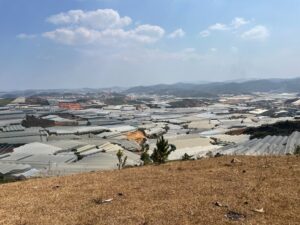
In recent years, rapid economic growth in Vietnam has led to rising land prices. As a result, many young members of the K’Ho community have abandoned coffee farming due to low income levels and have sold their land. Former coffee fields are increasingly being converted into densely packed greenhouse developments, and the once-scenic coffee landscapes are gradually disappearing.
In response to this situation, Mr. Yamaoka has dedicated himself to preserving the coffee cultivation heritage of the K’Ho community by sharing his expertise in fermentation and roasting. Thanks to these efforts, coffee produced by the K’Ho community—once largely unknown—has achieved remarkable recognition, ranking within the world’s top 15 in international evaluations and commanding prices approximately five times higher than conventional market rates. This year, the goal is to reach the top five, and within three years, to achieve the top global ranking.
After learning about Mr. Yamaoka’s work through a newspaper article, a member of our staff visited his village, located about 40 minutes from central Da Lat. Upon understanding the background and significance of his activities, we offered to collaborate in supporting coffee cultivation efforts.
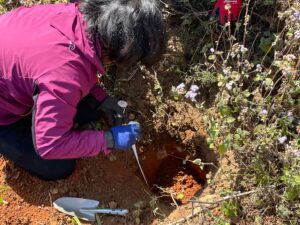
This June, new coffee seedlings will be planted with the aim of winning a global competition in three years. Tromso’s biochar will be applied in the cultivation process, and agricultural guidance will be provided under the supervision of Professor N. from Tottori University. Mr. Yamaoka believes that excellence in fermentation and roasting alone has limits, and that improving cultivation from the seedling stage will be key to achieving world-class quality.
We share his vision. By supporting biochar-based cultivation practices and helping enhance both productivity and quality, we hope to contribute to building a sustainable and profitable model for coffee production within the K’Ho community.
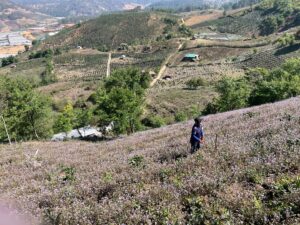
If the coffee produced by the K’Ho farmers gains greater global recognition, it may help preserve the region’s remaining coffee landscapes—often referred to locally as the “Last Coffee Valley”—and provide sustainable economic opportunities for the community.
Tromso will continue to contribute wherever possible to support sustainable agriculture and community-driven development.